Đề ôn thi Đề thi tốt nghiệp THPT môn Tiếng Anh - Mã đề THPT-92
Giới thiệu đề thi
Đề Tiếng Anh ôn thi tốt nghiệp THPT mã THPT-92 có 40 câu hỏi trắc nghiệm theo cấu trúc đề thi của Bộ GD-ĐT, với tổng thời gian làm bài 50 phút. Đây là đề thứ 92 trong bộ 180 đề ôn thi toàn diện môn Tiếng Anh tốt nghiệp THPT năm 2027 của DethiAnh.
Bạn đang truy cập đề thi THPT-92 ở chế độ Ôn tập; kết quả đúng/sai sẽ hiển thị ngay sau khi click chọn đáp án, cho phép bạn ôn tập nhanh qua mỗi đề thi chỉ trong 15-30 phút.
Bạn có thể click nút hỗ trợ ở các câu hỏi để ôn tập kiến thức.Đừng ☹️ nếu chọn sai đáp án; click vào đáp án đúng được đánh dấu để xem giải thích chi tiết và tiến bộ qua mỗi câu hỏi.
Chúc bạn ôn thi hiệu quả, xây dựng gốc Tiếng Anh vững chắc và chinh phục điểm 8-9-10!
Đề chuẩn
Đề thi được xây dựng theo đúng cấu trúc đề của Bộ GD-ĐT.
Toàn diện
180 đề thi với bộ câu hỏi không trùng lặp, bao quát hết phạm vi ôn thi.
Tiện lợi
Tự ôn thi mọi lúc mọi nơi trên máy tính, điện thoại, máy tính bảng.
Hiệu quả
Kết hợp 2 chế độ ôn tập & thi thử mang lại hiệu quả ôn thi cao nhất.
Read the following advertisement and choose the option that best fits each of the numbered blanks from 1 to 6.
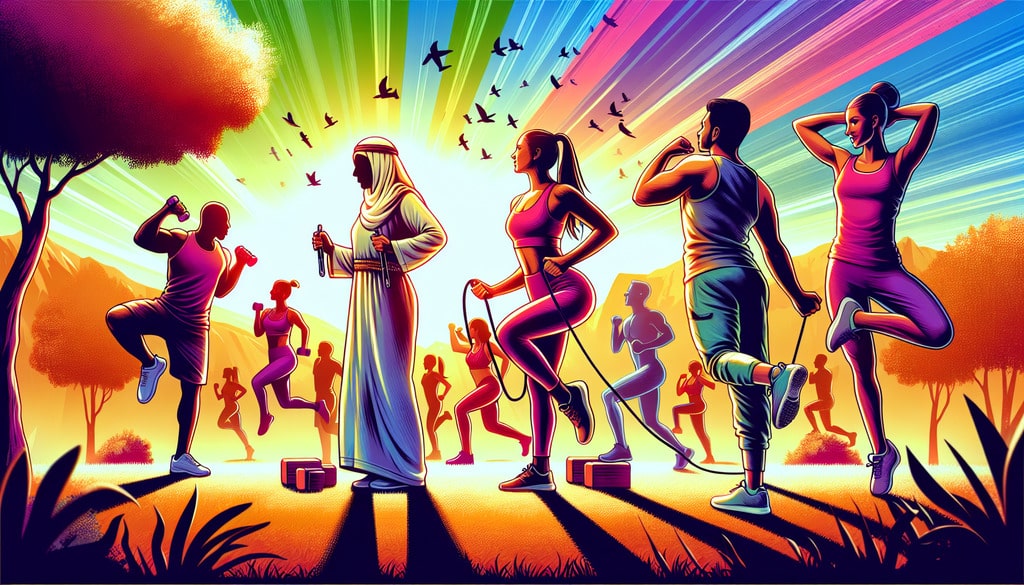
Tired of that stubborn (1) __________?
Wish you could sculpt your dream body without (2) __________ hours at the gym?
Introducing BodySculpt, the revolutionary new fitness program that helps you achieve (3) __________ in just weeks!
Our unique method combines high-intensity interval training with targeted muscle sculpting exercises, all designed (4) __________ your results.
Join BodySculpt today and discover the joy of (5) __________ your body and boosting your confidence!
Visit our website or call us (6) __________ your free consultation!
Question 1
- flabbiness
- flabby
- flab
- flabbily
Question 2
- spend
- spent
- spending
- to spend
Question 3
- a leaner and more toned physique
- a physique leaner and more toned
- a more toned and leaner physique
- a physique more toned and leaner
Question 4
- to maximize
- for maximizing
- to be maximized
- that maximize
Question 5
- to transform
- transform
- transforming
- transformed
Question 6
- to book
- for booking
- to booking
- booking
Read the following leaflet and choose the option that best fits each of the numbered blanks from 7 to 12.
Become an Environmental Advocate!
Passionate about protecting our planet? Want to make a real difference? Become an environmental advocate! You don’t need a special degree – just (7) __________ voice and a commitment to change.
Why become an advocate?
Our planet faces (8) __________ of serious environmental challenges, from climate change to pollution and deforestation. As an advocate, you can help raise awareness about these crucial issues and inspire action. Every individual effort contributes to a larger (9) __________.
How to get involved:
Educate yourself: Learn about the environmental challenges impacting your local (10) __________.
Speak up: Share your knowledge with friends, family, and your community. Don’t (11) __________ challenging harmful practices.
Take action: Participate in local cleanups, support sustainable businesses, and contact your elected officials to (12) __________ for environmentally friendly policies.
No matter how small your actions may seem, they collectively create powerful change. Join the movement and become an environmental advocate today!
Question 7
- your
- you
- yours
- yourself
Question 8
- an item
- a group
- a piece
- a number
Question 9
- trace
- impression
- impact
- reaction
Question 10
- hour and furthermore
- area and beyond
- corner and abroad
- age and older
Question 11
- shy away from
- give up on
- look forward to
- go along with
Question 12
- allocate
- analyze
- advocate
- apologize
Choose the option that indicate the best arrangement of utterances or sentences to make a meaningful exchange or text in each of the following questions from 13 to 17.
Question 13
a. Sarah: I can imagine! I've been thinking about taking up crocheting myself.
b. Emily: Thanks! Yes, I knitted it last month. It was surprisingly relaxing.
c. Sarah: Wow, this scarf is beautiful! Did you make it yourself?
- c - b - a
- b - a - c
- c - a - b
- b - c - a
Question 14
a. Emily: Definitely, but it was worth it. It's a masterpiece.
b. Emily: I just finished reading "One Hundred Years of Solitude" by Gabriel García Márquez.
c. Emily: It was incredible! The magical realism was so well done, but I did have to use a family tree to keep track of everyone.
d. David: Oh wow, how was it? I've heard it's amazing but dense.
e. David: Yeah, the multiple generations with the same names can get confusing.
- c - b - d - a - e
- d - b - c - e - a
- b - d - c - e - a
- c - d - e - b - a
Question 15
Hi Jessica,
a. It was really informative and inspiring, especially the part about composting.
b. I've been wanting to try it for ages but wasn't sure how.
c. Just wanted to say I loved your recent blog post about sustainable living!
d. Keep up the amazing work on the blog!
e. Your step-by-step guide was super helpful, thanks for making it so easy to understand.
Best,
Maria
- c - a - b - e - d
- d - e - c - b - a
- d - a - b - c - e
- c - d - b - a - e
Question 16
a. From breathtaking aerial photography to efficient package delivery, drones are changing the way we see and interact with our world.
b. This technology's rapid evolution ensures an exciting future filled with boundless possibilities.
c. While concerns about privacy and safety remain valid, ongoing technological advancements and regulations are addressing these issues.
d. As drones become more sophisticated and accessible, their potential applications will continue to expand, impacting fields like agriculture, filmmaking, and even disaster relief.
e. The world of drones is no longer a futuristic fantasy, but a tangible reality transforming various industries.
- d - e - c - b - a
- c - a - d - e - b
- d - c - b - a - e
- e - a - c - d - b
Question 17
a. Owner Tom Miller, a seasoned craftsman with over 30 years of experience, generously shares his knowledge through workshops and classes.
b. Tom's dedication to preserving traditional woodworking techniques and his passion for fostering a love for the craft have made "Carpenter's Haven" a true gem in the community.
c. The shop's warm and inviting atmosphere fosters a sense of camaraderie among its patrons, transforming it into a space for creativity and connection.
d. The small woodworking shop on Elm Street, "Carpenter's Haven," has become a beloved community hub.
e. From teenagers learning basic joinery to retirees crafting intricate wooden toys, "Carpenter's Haven" welcomes individuals of all skill levels.
- e - c - b - d - a
- d - e - b - c - a
- e - d - b - c - a
- d - a - e - c - b
Read the following passage about the importance of water and choose the option that best fits each of the numbered blanks from 18 to 22.
The importance of water to life cannot be overstated. (18) __________. Indeed, (19) __________, illustrating its indispensable role in our survival. From regulating body temperature to transporting nutrients and oxygen, water plays a critical role in maintaining homeostasis and supporting optimal physiological function.
(20) __________. When we don't consume enough fluids, our bodies are unable to perform essential functions efficiently. Mild dehydration can lead to symptoms like fatigue, headache, and dizziness, while severe dehydration can result in more serious complications such as heat stroke, kidney failure, and even death. Therefore, it is crucial to prioritize hydration by consuming adequate amounts of water throughout the day.
The amount of water we need to drink varies depending on factors such as age, activity level, and climate. However, a general guideline for adults is to aim for eight glasses of water per day. (21) __________, should be adjusted based on individual needs and circumstances. For instance, athletes and individuals living in hot climates may require significantly more water to compensate for fluid losses through sweat.
In conclusion, prioritizing hydration is paramount to maintaining good health and well-being. (22) __________, is a precious resource that sustains life and enables our bodies to function optimally. By understanding the importance of hydration and making conscious efforts to consume adequate fluids, we can support our overall health and vitality.
Question 18
- Though essential for plant growth and agriculture, water can also be a destructive force in natural disasters
- As the fundamental building block of cells and the medium in which vital biological processes occur, water is essential for all living organisms
- While often overlooked as a simple substance, water is vital for industrial processes and manufacturing
- Despite its abundance on Earth, access to clean water remains a challenge for certain communities
Question 19
- many fruits and vegetables have a high water content
- water covers approximately 71% of the Earth's surface
- the human body is composed of approximately 60% water
- the average person consumes roughly two liters of water per day
Question 20
- Water purification methods are essential in areas with limited access to clean water
- Dehydration, a state of inadequate water intake, can have significant consequences for our well-being
- Overhydration, though rare, can also disrupt the body's electrolyte balance
- Proper nutrition, in conjunction with hydration, is crucial for overall health
Question 21
- This amount, however small it may seem
- This daily intake, while beneficial for some
- This practice, easily incorporated into daily routines
- This recommendation, though widely circulated
Question 22
- Hydration, a concept often misunderstood
- Water, which is often taken for granted
- Good health, a state many people desire
- Our well-being, something we should strive for
Read the following passage about the history of cartography and choose the best answer to each of the following questions from 23 to 30.
The history of cartography is surprisingly ancient, reaching back far beyond what many might assume. Early humans, even before the development of writing systems, created maps. These were not the precise, satellite-image-based maps we use today, but rather rudimentary sketches on cave walls, bones, or even arranged stones. These early representations served as memory aids, helping people navigate their surroundings, track migratory patterns of animals, and denote important landmarks or resources.
One of the oldest surviving maps, dating back to approximately 6200 BC, is a wall painting found in Turkey at Çatalhöyük. It depicts a bird's-eye view of a village, possibly representing the settlement itself. While its accuracy is debatable, this map, alongside other early examples from Mesopotamia and ancient China, demonstrates the innate human desire to visualize and understand the spatial relationships within their world.
As civilizations developed, so too did their cartographic skills. The Greeks, with their emphasis on mathematics and geometry, made significant contributions to the scientific development of mapmaking. Ptolemy, a Greek scholar living in Egypt in the 2nd century AD, produced a geographical treatise known as "Geographia." This work included maps based on a grid system of latitude and longitude, a system still used today.
While Ptolemy's work was groundbreaking, the Middle Ages saw a shift in cartographic focus. Maps produced in Europe during this time were often more symbolic than geographically accurate. These maps, like the T-O maps, often centered on Jerusalem and depicted religious themes, reflecting the Church's influence on medieval life. Despite this shift, the desire to map the world never faded, setting the stage for the Age of Exploration and the incredible advancements in cartography that would follow.
Question 23
Which of the following is NOT mentioned as a material used for early mapmaking?
- Cave walls
- Arranged stones
- Clay tablets
- Bones
Question 24
The word "ancient" in paragraph 1 is OPPOSITE in meaning to __________.
- modern
- recent
- native
- official
Question 25
The word "It" in paragraph 2 refers to __________.
- the village
- Çatalhöyük
- the wall painting
- bird's-eye view
Question 26
Which of the following best paraphrases the first sentence in paragraph 3?
- Civilizations developed despite their poor cartographic skills.
- Cartographic skills improved as civilizations advanced.
- Cartographic skills were not essential for the development of civilizations.
- The development of civilizations hindered cartographic progress.
Question 27
The word "symbolic" in paragraph 4 could be best replaced by __________.
- detailed
- representative
- factual
- precise
Question 28
Which of the following is TRUE according to the passage?
- Ptolemy's "Geographia" utilized a grid system of latitude and longitude.
- The earliest maps were created after the development of writing.
- Ptolemy's maps focused primarily on religious themes.
- Medieval European maps were renowned for their geographic accuracy.
Question 29
In which paragraph of the passage does the writer use a simile?
- Paragraph 1
- Paragraph 2
- Paragraph 3
- Paragraph 4
Question 30
In which paragraph of the passage does the writer contrast the mapmaking approaches of different eras?
- Paragraph 1
- Paragraph 2
- Paragraph 3
- Paragraph 4
Read the following passage about the struggle for civil rights and choose the best answer to each of the following questions from 31 to 40.
[I] The fight for civil rights has been a long and arduous journey, spanning centuries and continents. [II] From the abolition of slavery to the women's suffrage movement and the fight for LGBTQ+ rights, these struggles have shaped the world we live in. [III] The fight for equality frequently calls upon tremendous courage and resilience in the face of adversity, often requiring sustained activism and challenging deeply entrenched social norms. [IV]
The Civil Rights Movement in the United States, gaining significant momentum in the mid-20th century, serves as a powerful example of this struggle. It challenged the pervasive system of racial segregation and discrimination known as Jim Crow, which denied African Americans basic rights such as voting, access to education, and equal treatment under the law. This system, rooted in the legacy of slavery, created a society where opportunities were systematically limited based on race.
The movement utilized a variety of tactics, including non-violent protests, boycotts, and legal challenges to dismantle discriminatory laws and practices. Landmark Supreme Court cases, like Brown v. Board of Education in 1954, which declared state-sponsored segregation in public schools unconstitutional, were critical victories. The struggle also involved countless acts of individual bravery, such as Rosa Parks' refusal to give up her seat on a bus in Montgomery, Alabama, which sparked a city-wide boycott and galvanized the civil-rights movement.
Despite significant progress, the fight for civil rights is far from over. Discrimination persists in various forms, and the struggle for equality continues in areas like voting rights, criminal justice reform, and economic opportunity. Understanding the history of these movements, with their triumphs and setbacks, is essential for building a more just and equitable future. By learning from the past and continuing to advocate for change, we can work toward a society where the promise of equal rights is a reality for all.
Question 31
Where in paragraph 1 does the following sentence best fit?
- I
- II
- III
- IV
Question 32
The phrase "calls upon" in paragraph 1 could be best replaced by __________.
- expects
- requires
- involves
- demands
Question 33
The word "This" in paragraph 2 refers to __________.
- the Jim Crow system
- slavery's legacy
- racial segregation
- limited opportunity
Question 34
According to paragraph 2, which of the following was NOT a consequence of the Jim Crow system?
- Limited access to education for African Americans
- Unequal treatment of African Americans under the law
- Denial of voting rights for African Americans
- Increased economic opportunity for African Americans
Question 35
Which of the following best summarises paragraph 3?
- From legal battles to individual acts of courage, the movement fought against discriminatory practices with methods like boycotts and protests, winning key victories like the Brown ruling.
- The Civil Rights Movement employed diverse strategies like protests and legal action, achieving key victories such as Brown v. Board of Education, alongside individual acts of defiance like Rosa Parks' bus protest.
- Legal challenges and boycotts were instrumental in ending segregation, aided by brave individuals like Rosa Parks, culminating in the landmark Brown v. Board of Education case.
- The movement saw victories like the Brown case, combined with protests, boycotts, and individual bravery like Rosa Parks', effectively challenging discriminatory laws.
Question 36
The word "civil-rights" in paragraph 3 is OPPOSITE in meaning to __________.
- legal rights
- discriminatory
- equal rights
- human rights
Question 37
Which of the following is TRUE according to the passage?
- Rosa Parks' actions were the only catalyst for the Civil Rights Movement.
- The Brown v. Board of Education case solely focused on economic disparities.
- The Civil Rights Movement completely eradicated all forms of discrimination.
- The fight for civil rights involves addressing issues like voting rights and criminal justice reform.
Question 38
Which of the following best paraphrases the first sentence in paragraph 4?
- Civil rights have advanced significantly, yet the fight goes on.
- Although much progress has been made, the struggle for civil rights is not yet complete.
- Despite major advancements, the battle for civil rights persists.
- The fight for civil rights has seen great success, but continues still.
Question 39
Which of the following can be inferred from the passage?
- Legal victories are sufficient to guarantee lasting social and political change regarding civil rights.
- The Civil Rights Movement of the mid-20th century is the sole focus of the ongoing struggle for equality.
- Securing civil rights requires ongoing effort and vigilance against persistent discrimination.
- Individual acts of bravery are less impactful than large-scale protests in achieving civil rights goals.
Question 40
Which of the following best summarises the passage?
- The persistent fight for civil rights, exemplified by the US Civil Rights Movement's struggle against Jim Crow, highlights the ongoing need to combat discrimination and strive for equality through activism and legal challenges.
- Centered on the US Civil Rights Movement, the passage explores the fight against racial segregation, emphasizing legal victories and individual bravery while acknowledging the continuing struggle for equality across various social issues.
- The passage details the history of civil rights struggles, focusing on the US Civil Rights Movement's use of non-violent protests and legal action against Jim Crow, underscoring the need for persistent efforts to achieve true equality.
- From the abolition of slavery to ongoing battles for equality, the passage examines the enduring struggle for civil rights, emphasizing the US Civil Rights Movement's tactics and the importance of continued advocacy for a just future.